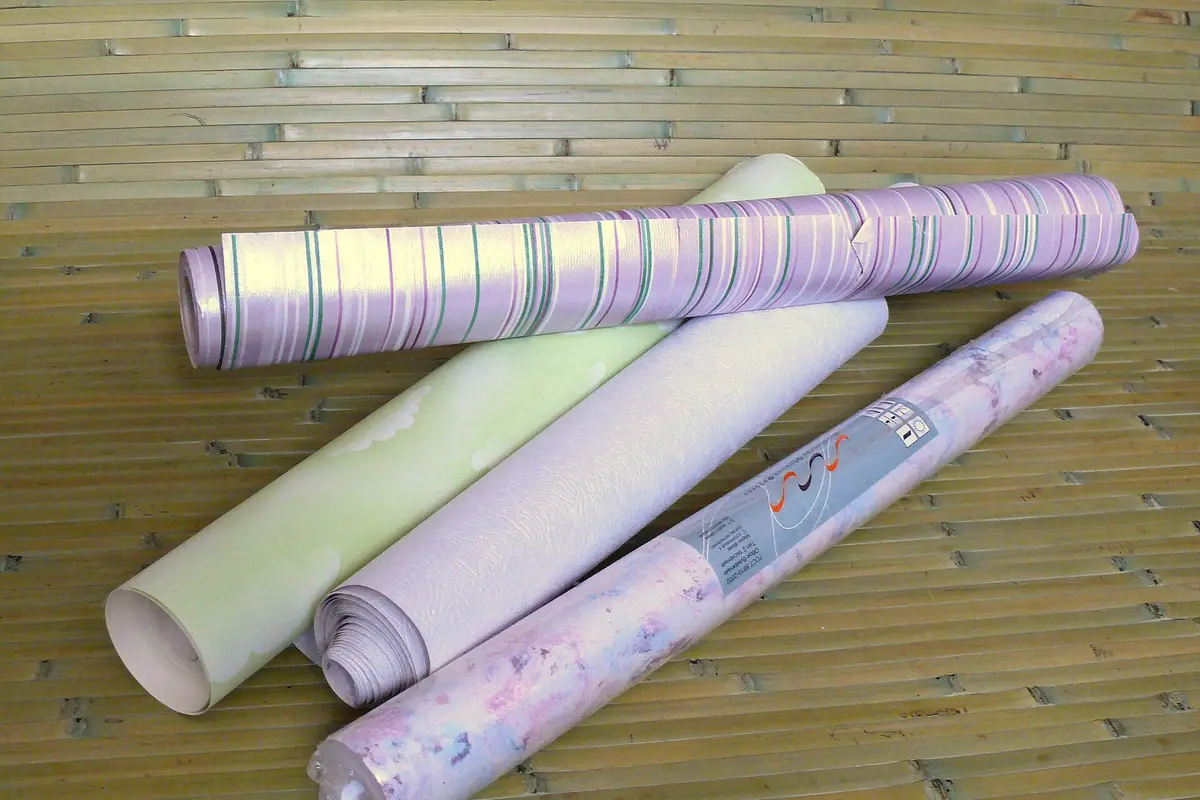
How to use the wallpaper calculator
- Choose All four walls of a room and type in the room length and width, or choose One or more walls and add up the width of each wall.
- Enter the wall height, from skirting board to ceiling. 2.4 m is typical.
- Pick your roll size. A common UK roll is 10.05 m × 53 cm. If your paper is different, choose Other size and copy the length and width from the label.
- Type in the pattern repeat from the label, and pick straight or half-drop match. Leave it at 0 for plain paper.
- Add your doors and windows. Open Change the trim allowance only if you want to leave more paper at the top and bottom.
- Tap Add to shopping list to keep the result, or Share link to send it to someone.
Why use this calculator
It counts the way paperhangers do. Each strip, or drop, runs from ceiling to skirting, so we work out how many drops fit on a roll and round down. Dividing the wall area by the roll area looks simpler but under-orders, because the offcut at the end of every roll is wasted.
It deals with pattern repeat properly. A pattern repeat makes every drop longer, so fewer drops fit on a roll. A half-drop (offset) match needs half a repeat more again. Both are in the sum, so you can see how much a bold pattern adds.
It shows its working and tells you to buy a spare. Under How we worked it out you can see every step with your own numbers. The result always shows a total with one extra roll, because shades can change between batches and the shop may not have more later.
How we worked it out
Your numbers, step by step. This updates as you change the calculator.
- Distance round the room = 2 × (4 m + 3 m) = 14 m
- Doors and windows: 1 door and 1 window take up about 2.7 m² of wall, which is the same as 1.13 m of wall width at 2.4 m high
- Width to paper = 14 m − 1.13 m = 12.88 m
- Length of each drop = wall height + trim = 2.4 m + 0.1 m = 2.5 m
- Drops needed = 12.88 m ÷ 0.53 m roll width, rounded up = 25 drops
- Drops per roll = 10.05 m roll ÷ 2.5 m, rounded down = 4
- Rolls = 25 drops ÷ 4 drops per roll, rounded up = 7 rolls
- Order 8 rolls to keep one spare from the same batch
The formula
Wallpaper is counted in drops. A drop is one strip, from the top of the wall to the bottom.
- Width to paper: for a room, 2 × (length + width), minus the doors and windows. For wall mode, the width you type in.
- Length of each drop: wall height + trim allowance + pattern repeat. For a half-drop match, add half a repeat again.
- Drops needed: width to paper ÷ roll width, rounded up.
- Drops per roll: roll length ÷ length of each drop, rounded down. You cannot hang part of a drop.
- Rolls: drops needed ÷ drops per roll, rounded up. We then add one spare.
For a 4 m by 3 m room, 2.4 m high, plain paper: the walls are 14 m round. One door (1.5 m²) and one window (1.2 m²) take off 2.7 m², which is 1.125 m of wall width at 2.4 m high. That leaves 12.875 m, which is 24.3 drops of 53 cm, so 25. Each drop is 2.5 m, so 4 fit on a 10.05 m roll. 25 ÷ 4 = 6.25, so 7 rolls.
What we assume
- A common UK roll is 10.05 m × 53 cm (5.33 m²). Many papers are 52 cm × 10.05 m or 52 cm × 10 m, so you can type in your own size.
- The trim allowance is 10 cm per drop in total, which is a tight trim. Some people allow up to 30 cm. A 30 cm trim on a 2.4 m wall cuts the drops per roll from 4 to 3, so it can add a quarter or more to the rolls.
- A door is taken as 1.5 m² and a window as 1.2 m². Windows come in many sizes. For a very large window, use wall mode and add up only the wall widths you will paper.
- A random-match or plain paper has no repeat allowance. Use 0 for these.
- If a drop is longer than the roll, the calculator tells you it cannot be done with that roll.
Tips
- Check the batch number on the label of every roll before you leave the shop. All the rolls for one room should have the same number.
- Buy your spare roll with the rest, from the same batch. Keep it for patching a tear or a stain later.
- Large patterns waste more paper. If you are choosing between two papers, the one with the smaller repeat will usually need fewer rolls.
- Measure the wall height in more than one place. Old houses are rarely square, and a drop that is a few centimetres too short is a ruined drop.
- Not sure how big the room is? Use the square metre calculator to check the measurements. For the walls, the paint calculator uses the same door and window sizes.
 Paint calculator
 Square metre calculator
 Plaster calculator
 Tile calculator
 Project shopping list
