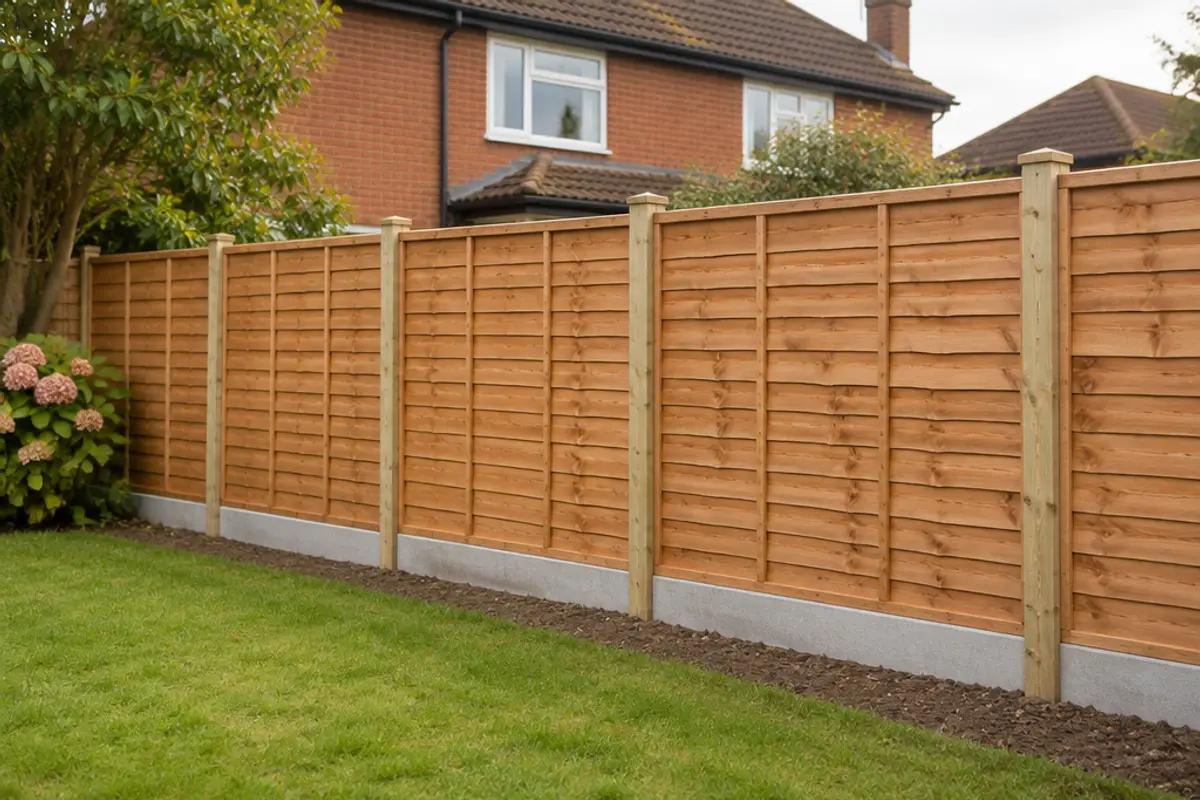
How to use the fence calculator
- Enter the Length of fence. Measure along the line from the centre of the first post to the centre of the last.
- Set the Panel width. A 6 ft panel is 1.83 m wide. Pick the Panel height from the list.
- Choose the Post size: 100 × 100 mm is standard, and 75 × 75 mm is light duty.
- Add the Corners or turns in the fence. Each corner gets one extra post.
- Leave Add gravel boards switched on if you want a board under each panel. Then read the panels, posts, Postcrete bags and post length.
- Tap Add to shopping list to keep the result or Share link to send it to your supplier.
Why use this calculator
It works from the real post spacing. Posts sit a panel plus a post width apart, not just a panel apart, and the calculator uses that spacing so the numbers do not come up short on a long run.
It deals with the last panel. When the run does not fit a whole number of panels, it shows how wide the cut panel will be and warns you if it would be very narrow.
It tells you how long the posts need to be, with the gravel board and the hole depth included. Many people only think about the height of the panel.
It shows its working. Under How we worked it out you can see every step with your own numbers.
How we worked it out
Your numbers, step by step. This updates as you change the calculator.
- Post centres are a panel plus a post apart: 1.83 m + 0.1 m = 1.93 m.
- Whole bays = 10 m ÷ 1.93 m = 5 whole panels, with 0.35 m left over.
- The leftover 0.35 m takes one more panel, cut down to about 0.25 m wide (the bay is 0.35 m between post centres, less one 0.1 m post).
- Panels = 5 + 1 cut panel = 6.
- Posts = panels + 1 = 7.
- Postcrete = 7 posts × 2 bags per post = 14 bags of 20 kg.
- Gravel boards = one under each panel = 6.
- Post length = 1.83 m panel + 0.15 m gravel board + 0.66 m in the ground = 2.64 m, so a 2.7 m post.
The formula
A bay is one panel plus one post. So the posts sit a panel width plus a post width apart.
Post centres = panel width + post width
With 1.83 m panels and 100 mm posts, that is 1.83 + 0.1 = 1.93 m. Divide the length of the fence by this to get the whole panels, and give any leftover one more cut panel.
- Panels: whole bays, plus 1 cut panel if there is more than a post’s width left over.
- Posts: panels + 1, plus 1 for each corner.
- Postcrete: posts × bags per post (2 for a 100 mm post, 1 for a 75 mm post).
- Gravel boards: one under each panel, if you tick the box.
- Post length: panel height + gravel board + the part in the ground. The part in the ground is a third of the height above ground, and at least 0.6 m. The result is rounded up to the next standard post length (1.5, 1.8, 2.1, 2.4 or 2.7 m).
For 10 m of 1.83 m high fence with 100 mm posts and gravel boards: 10 ÷ 1.93 is 5 whole panels with 0.35 m left over. The leftover takes a sixth panel, cut to about 0.25 m wide. That is very narrow, so the calculator warns you to shift the posts or ask about a smaller infill panel. As it stands that makes 6 panels, 7 posts, 14 bags of Postcrete, 6 gravel boards and a 2.7 m post.
What we assume
- A standard panel is 1.83 m (6 ft) wide. Heights are 0.3, 0.6, 0.91, 1.22, 1.52 and 1.83 m. Some panels, such as featherboard or hit-and-miss, are slightly different, so check yours.
- Posts are 100 × 100 mm (standard) or 75 × 75 mm (light duty). The exact post spacing depends on the panel and how the post is slotted, so check the panel product.
- Post length rule: panel height + gravel board + at least 600 mm in the ground. A 1.83 m panel with a 150 mm gravel board needs about 2.64 m, so a 2.7 m post. Some merchants recommend 2.4 m posts for 6 ft panels, which only works for panels up to about 1.79 m and no gravel board. Ask your supplier or a fencer.
- Postcrete: 2 bags of 20 kg for a 100 × 100 mm post in a 300 × 600 mm hole. A 75 × 75 mm post is taken as 1 bag, based on the maker’s table for a 200 × 600 mm hole. The maker says not to use it for gateposts for gates over 1 m wide.
- The extra post for each corner is a simple allowance, not a rule. Check how you will build your corners.
- Gravel boards are 1.83 m long and 150 mm wide in our sums, although some are 140 mm.
Tips
- Measure from centre to centre of the end posts. If you measure the outside edge of the run, you will be out by half a post width at each end.
- Use the calculator to try a few panel positions. A run that leaves a very narrow last panel can look better if you shift the posts a little so the leftover is shared between bays.
- Buy one spare bag of Postcrete. It is cheap compared with running short with a post half set.
- Gateposts and end posts take more load than the rest. Postcrete is not meant for gateposts for gates wider than 1 m, so ask your supplier what to use.
- Check who owns the boundary and what height you are allowed to build. Rules depend on where you live and the position of the fence, so ask your council before you start.
- Setting the posts in your own concrete instead of Postcrete? Work out the mix with the concrete calculator.
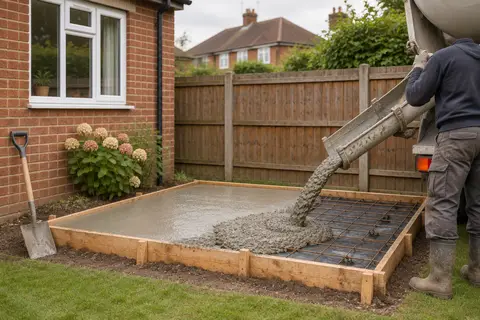 Concrete calculator
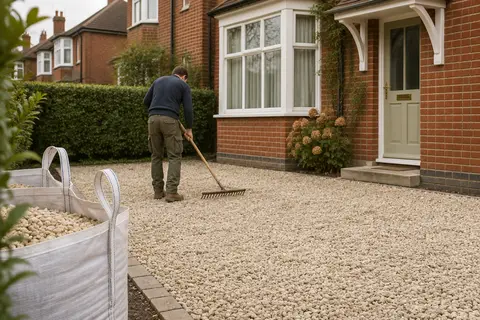 Gravel calculator
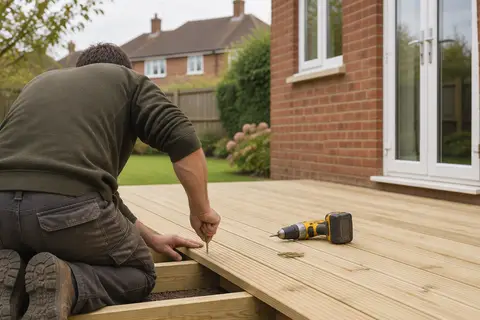 Decking calculator
 Timber calculator
 Garden room cost calculator
 Project shopping list