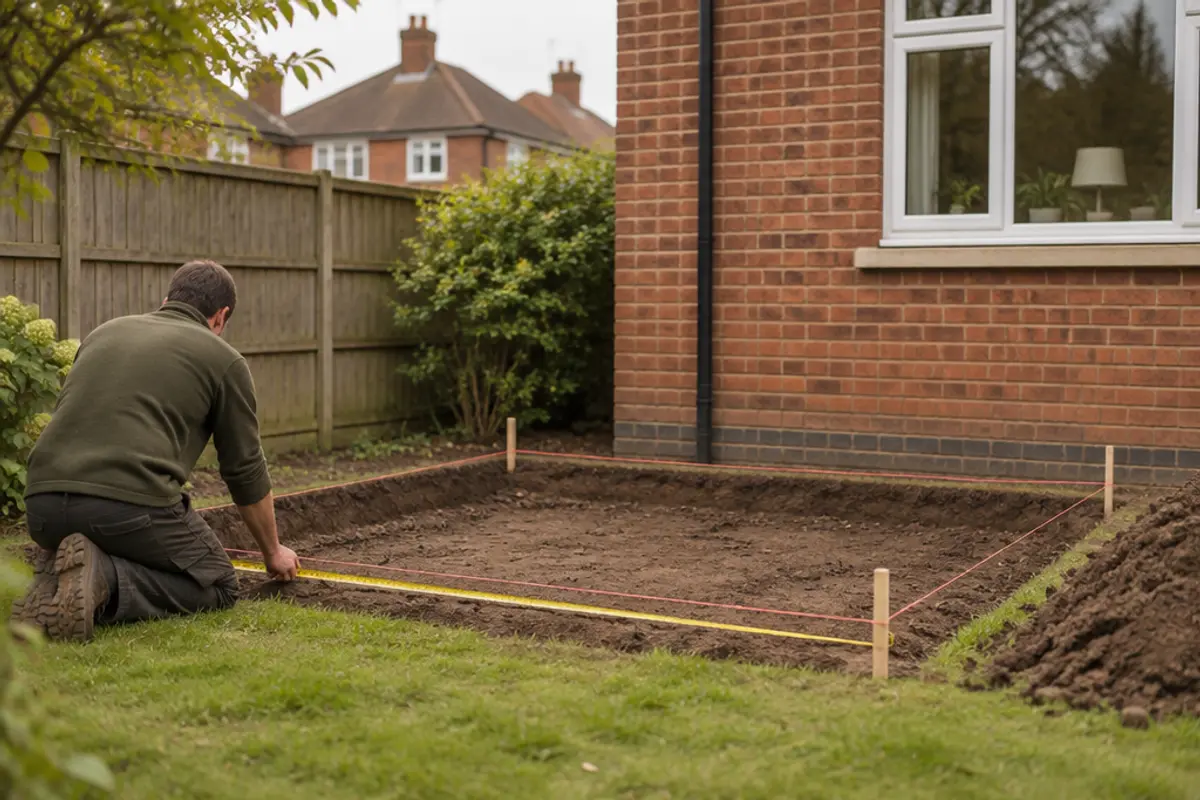
How to use the cubic metre calculator
- Choose what you are measuring: a box, a cylinder or round hole, or an area × a depth.
- Type in the sizes. Each box has its own unit, so you can use metres, centimetres, millimetres, feet or inches.
- Pick a material if you want the weight, such as sharp sand, gravel, topsoil, concrete or water. Leave it on Nothing for the volume only.
- Read the volume in m³, litres, cubic feet and cubic yards. For loose materials it also shows the tonnes and the bulk bags.
- Tap Add to shopping list to keep the result, or Share link to send it to someone.
Why use this calculator
It is made for building and gardening, not shipping. Many cubic metre tools are for freight boxes. This one starts from a slab, a trench, a lawn or a round hole, and goes on to tonnes and bulk bags.
It turns volume into weight. Merchants sell sand, gravel and topsoil by the tonne, but you measure the job in cubic metres. Pick the material and you get both, with the density used shown in the working.
It shows the steps. Under How we worked it out you can see the volume, the litres, the cubic feet and the weight, so you can check each one.
How we worked it out
Your numbers, step by step. This updates as you change the calculator.
- Volume = length × width × depth = 3 m × 2 m × 0.5 m = 3 m³
- Litres = 3 m³ × 1,000 = 3000 litres
- Cubic feet = 3 m³ ÷ 0.02832 = 105.94 ft³; cubic yards = ÷ 0.7646 = 3.924 yd³
The formula
All the sums are in metres, and the answer is in cubic metres (m³).
- Box: length × width × depth. 3 m × 2 m × 0.5 m = 3 m³.
- Cylinder or round hole: π × radius × radius × height. The radius is half the diameter.
- Area × depth: area in m² × depth in metres. 20 m² at 100 mm (0.1 m) = 2 m³.
- Litres: m³ × 1,000.
- Cubic feet: m³ ÷ 0.0283. Cubic yards: m³ ÷ 0.7646.
- Weight: m³ × tonnes per m³ for the material you pick.
- Bulk bags: weight ÷ 0.85 tonnes, rounded up.
For 2 m³ of topsoil: 2 × 1.5 = 3 tonnes. 3 ÷ 0.85 = 3.5, so 4 bulk bags.
What we assume
Weights are for loose material as delivered, in tonnes per m³:
| Material | Tonnes per m³ |
|---|---|
| Sharp sand | 1.7 |
| Building sand | 1.6 |
| Gravel (10 to 20 mm) | 1.7 |
| All-in ballast | 1.8 |
| Topsoil | 1.5 |
| Concrete | 2.4 |
| Water | 1.0 |
- These are typical figures. Real densities vary with the supplier and with moisture. The ballast figure comes from a single supplier, so check it with yours.
- A bulk bag holds about 850 kg. Bags sold at some shops hold 750 kg to 1 tonne, so check yours.
- Water is 1,000 kg per m³, which is 1 tonne.
- Concrete is about 2.4 tonnes per m³, whether wet or set. Over 1 m³ of concrete, ready-mix by lorry is usually cheaper than bags.
Tips
- Measure small depths in millimetres. A slab 100 mm deep is 0.1 m deep. Mixing up mm and m is the easiest way to be out by 1,000 times.
- Merchants often sell loose material by the tonne, and concrete by the m³. Use the tonnes to cubic metres converter if you only have a weight.
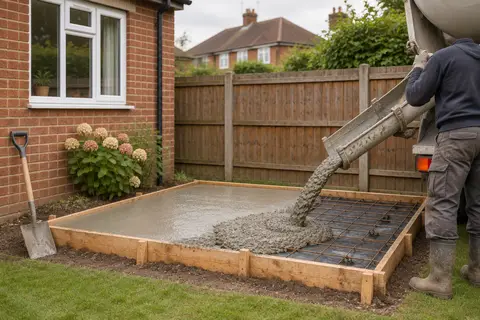
- For concrete, use the concrete calculator. It adds waste, handles footings, steps and post holes, and gives bags or a ready-mix order.
- Weights here are for loose material as delivered. Damp sand and soil weigh more, and compacted material takes up less space, so order a little extra.
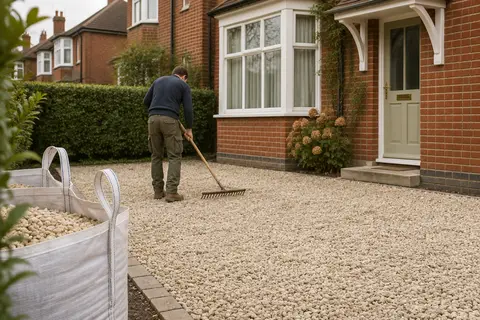
- For area and depth jobs like a lawn or a path, you can also use the topsoil calculator or the gravel calculator.
 Square metre calculator
 Concrete calculator
 Gravel calculator
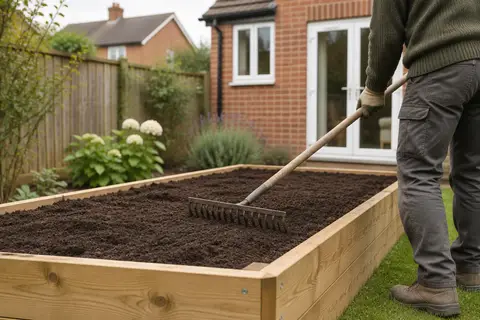 Topsoil calculator
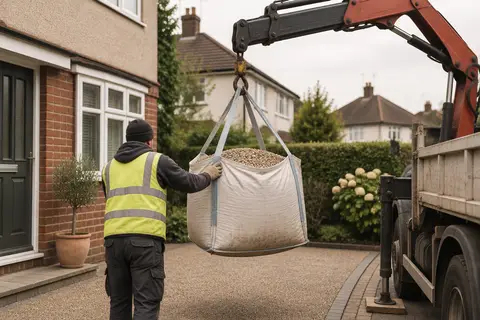 Tonnes to m³ converter